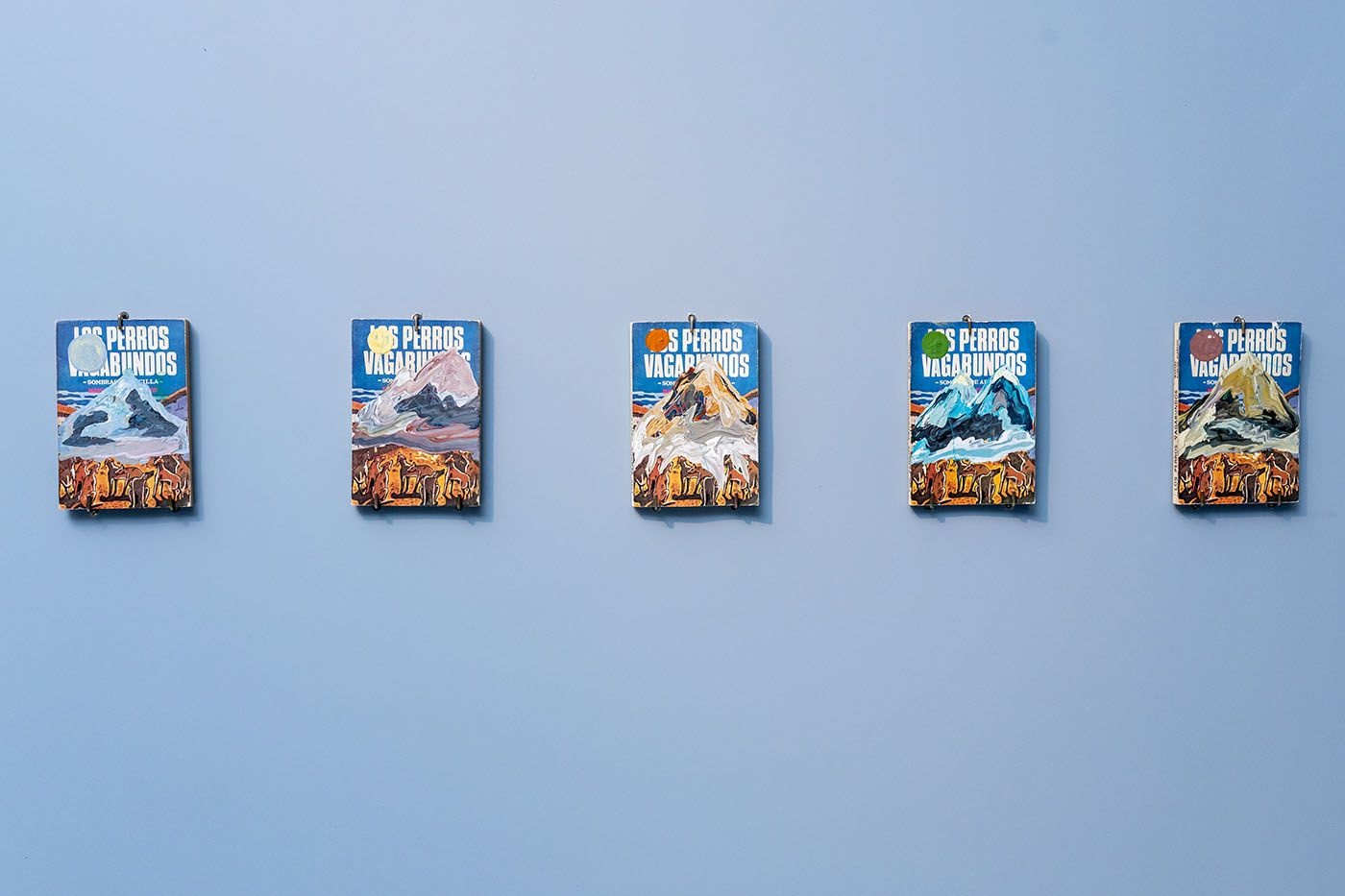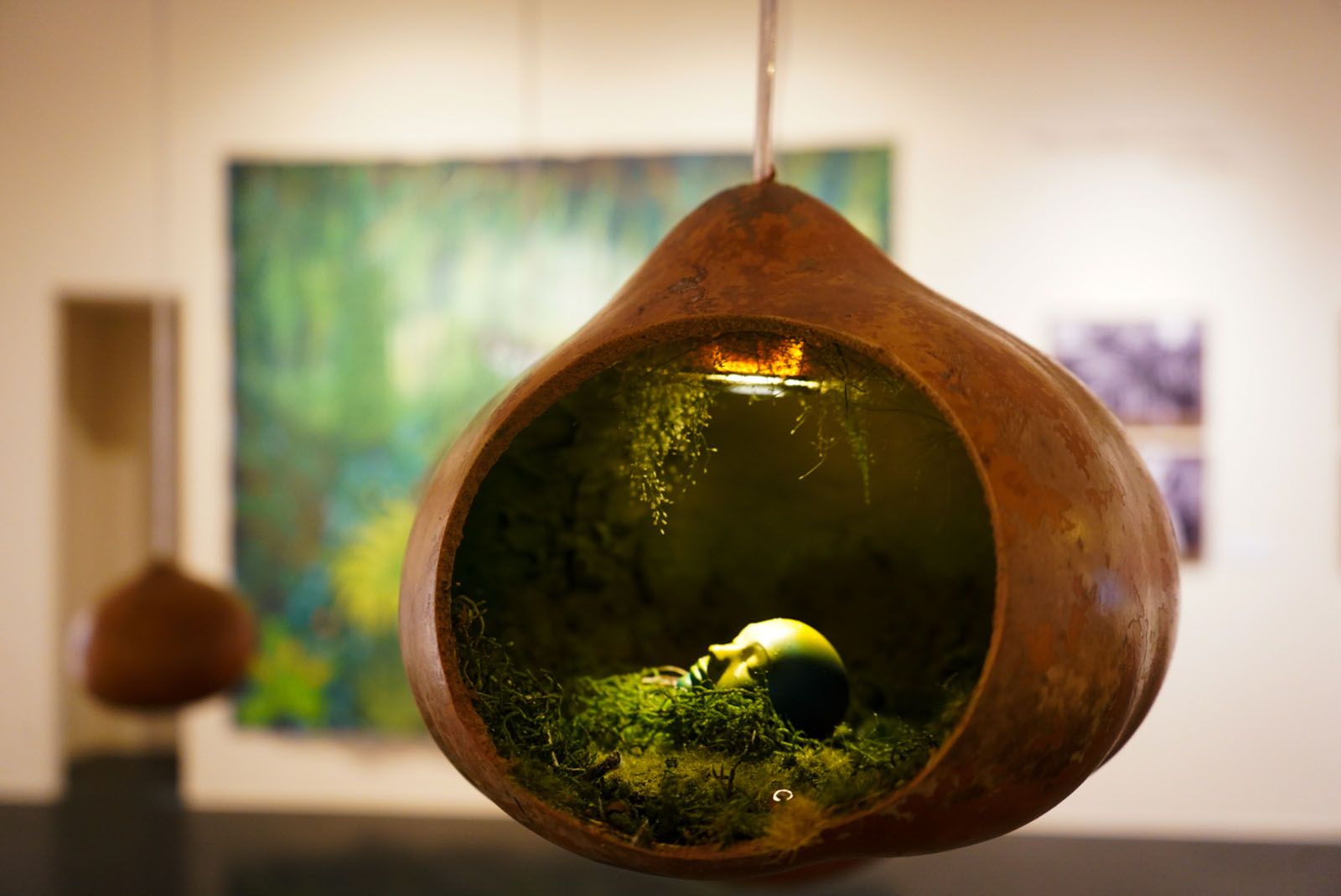
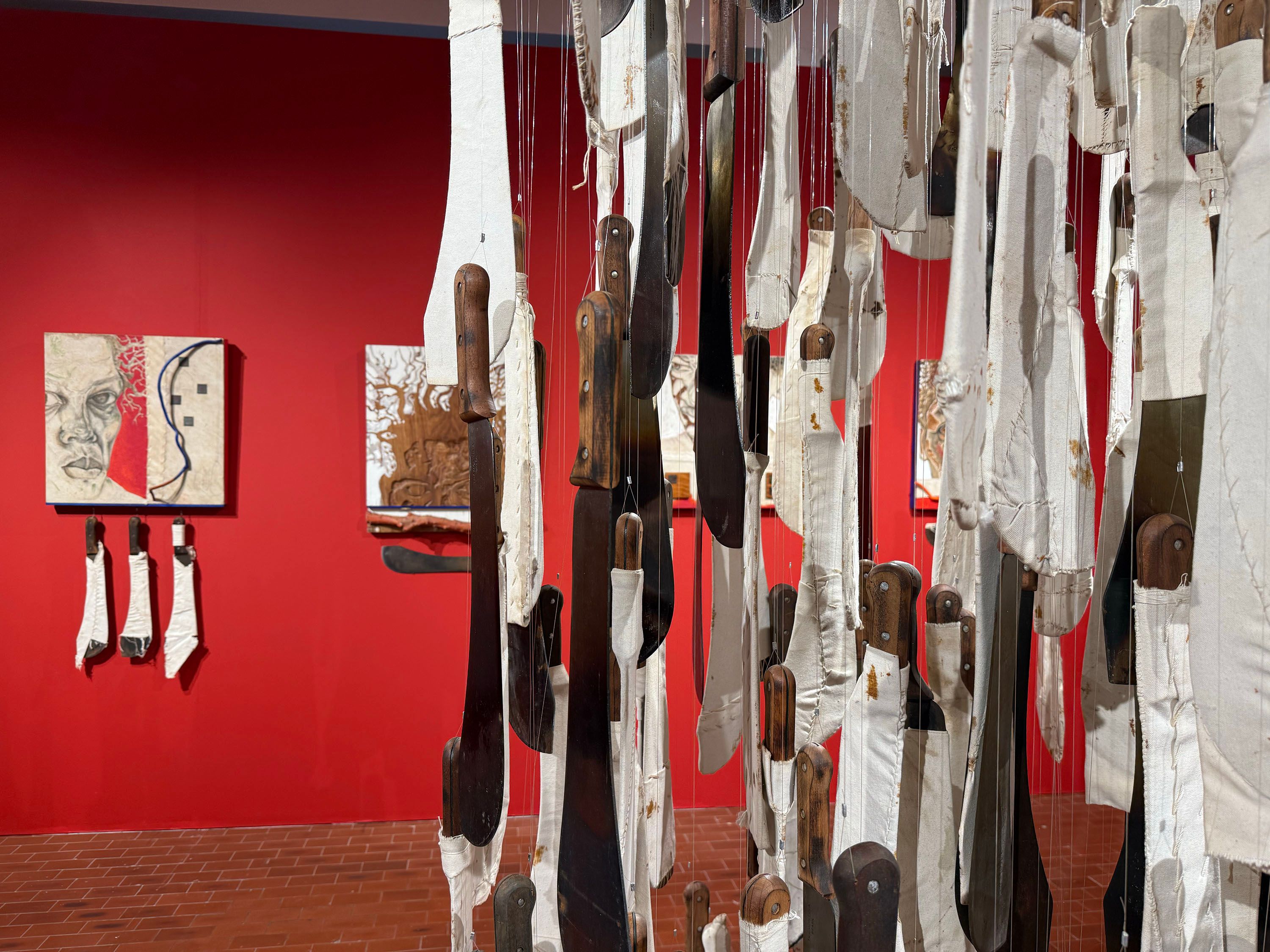
Éder Muniz, Ilê Ti Okàn, 2024. Técnica mixta, resina y calabaza, 35 cm x 25 cm (cada obra). Colección del artista. Foto: Luan Teles / SecultBA
Vista de instalación
18 Junio 2025
Revista América Latina
2 min de lectura
Raízes: Comienzo, Medio y Comienzo
Partiendo de cosmologias africanas sobre el tiempo, <em>Raízes: Começo, Meio e Começo</em> (Raíces: comienzo, medio y comienzo) trasciende la lógica occidental del tiempo como medida irreversible con un principio, un medio y un final, y propone la ancestralidad como eje fundamental para la comprensión y construcción del presente y del futuro.
La exposición Raízes: Começo, Meio e Começo tuvo lugar en el Museo Nacional de la Cultura Afrobrasilera (MUNCAB), en Salvador. La muestra reunió los trabajos de 80 artistas negros y negras, divididos en cinco ejes temáticos: “Orígenes”, “Sagrado”, “Calles”, “Afrofuturismo” y (festividad de) “Bembé do Mercado”.
El baobá, considerado el árbol de la vida por algunas culturas africanas, se ubicó en el centro de la muestra. Sus raíces profundas representan ancestralidad y memoria mientras el tronco simboliza las nuevas generaciones, arraigadas en una base sólida para sobrevivir a las adversidades. Las ramas, a su vez, evocan la madurez y las hojas que caen alimentan el ciclo de la renovación continua. En la historia de las poblaciones negras esclavizadas entre los siglos XV y XVI, el baobá también portaba el simbolismo de árbol del olvido. Antes de ser forzadas a atravesar el Atlántico en barcos negreros rumbo a las Américas, las personas africanas eran obligadas a realizar un ritual de desenraizamiento alrededor del baobá, como un intento de cortar sus vínculos con la tierra de origen y borrar los recuerdos.
Con curaduría de Jamile Coelho, directora del MUNCAB, y de Jil Soares, la exposición celebró esas raíces profundas y la resistencia africana.
Raízes: Começo, Meio e Começo tuvo lugar en el MUNCAB hasta marzo de 2025.
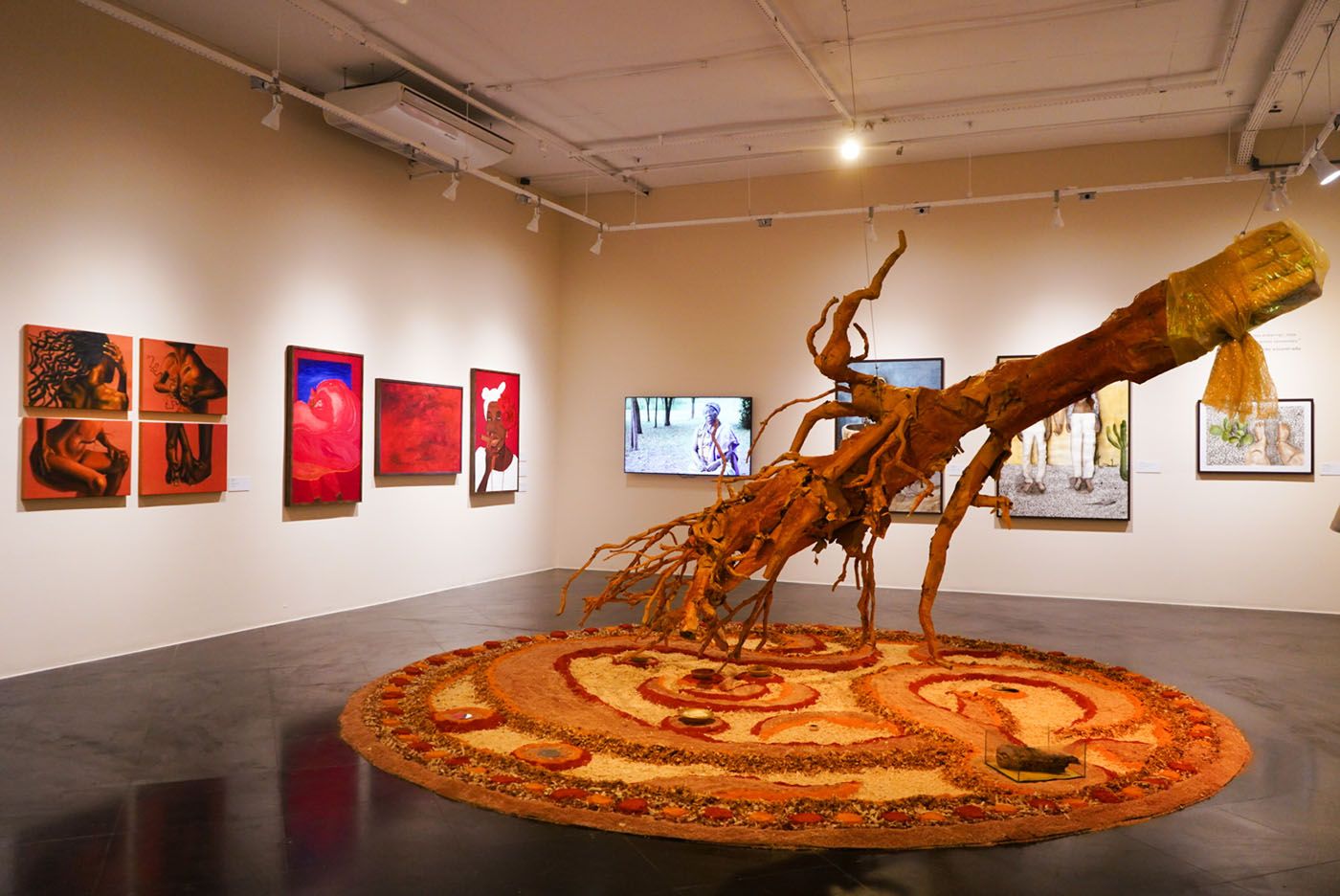
Jeise Ekê de Lundu, “Quem Procura o que não Guardou quando encontra não Reconhece”, 2024. Installation. Cardboard tree, kraft paper roll, latex paint, geo-paint, organic varnish, insect shells and fabric, sawdust floor with ceramic plates, 10 m x 10 m x 4 m. Artist’s collection. Photo: Luan Teles / SecultBA
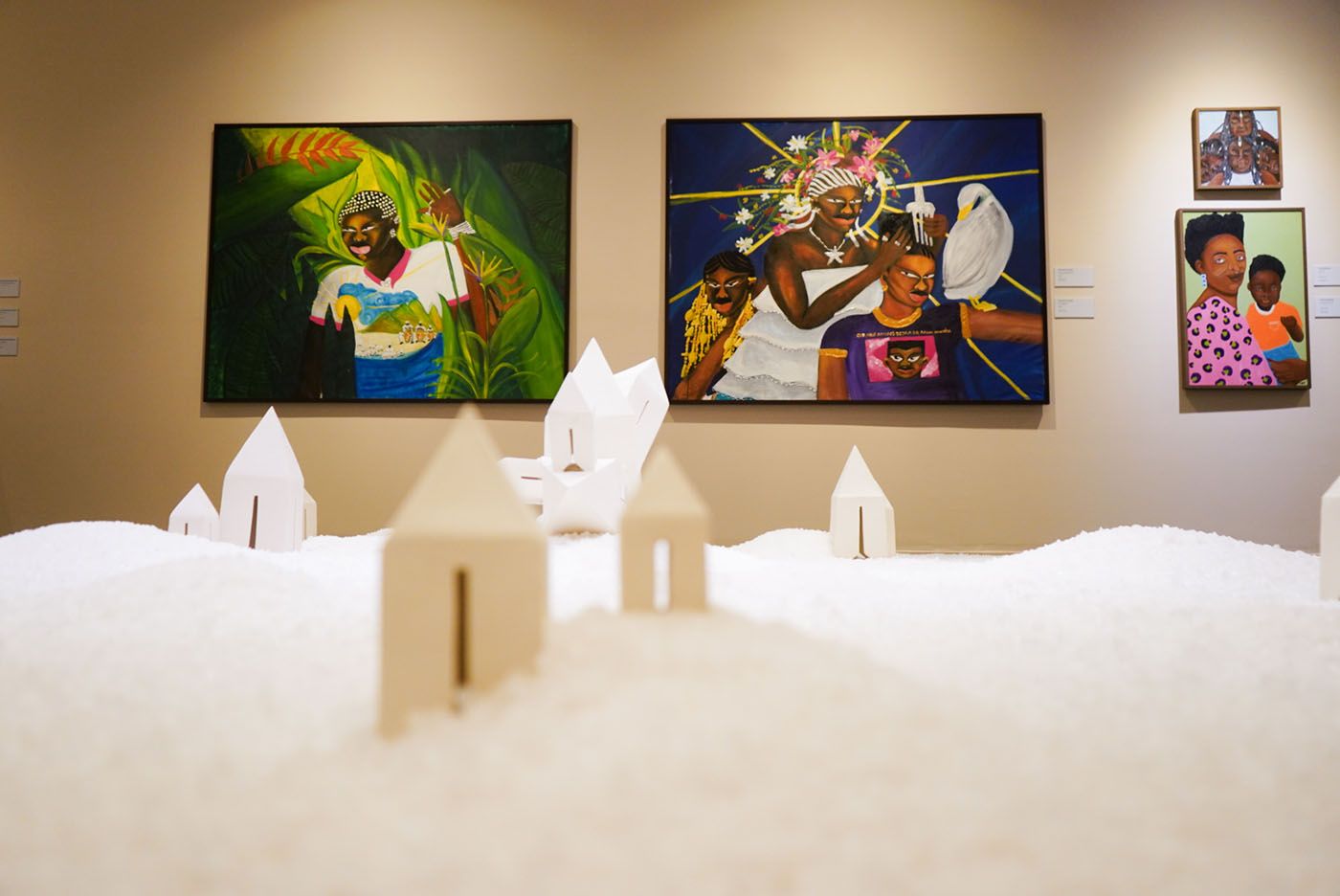
Exhibition view of Raízes: Começo, Meio e Começo, at MUNCAB. Photo: Luan Teles / SecultBA
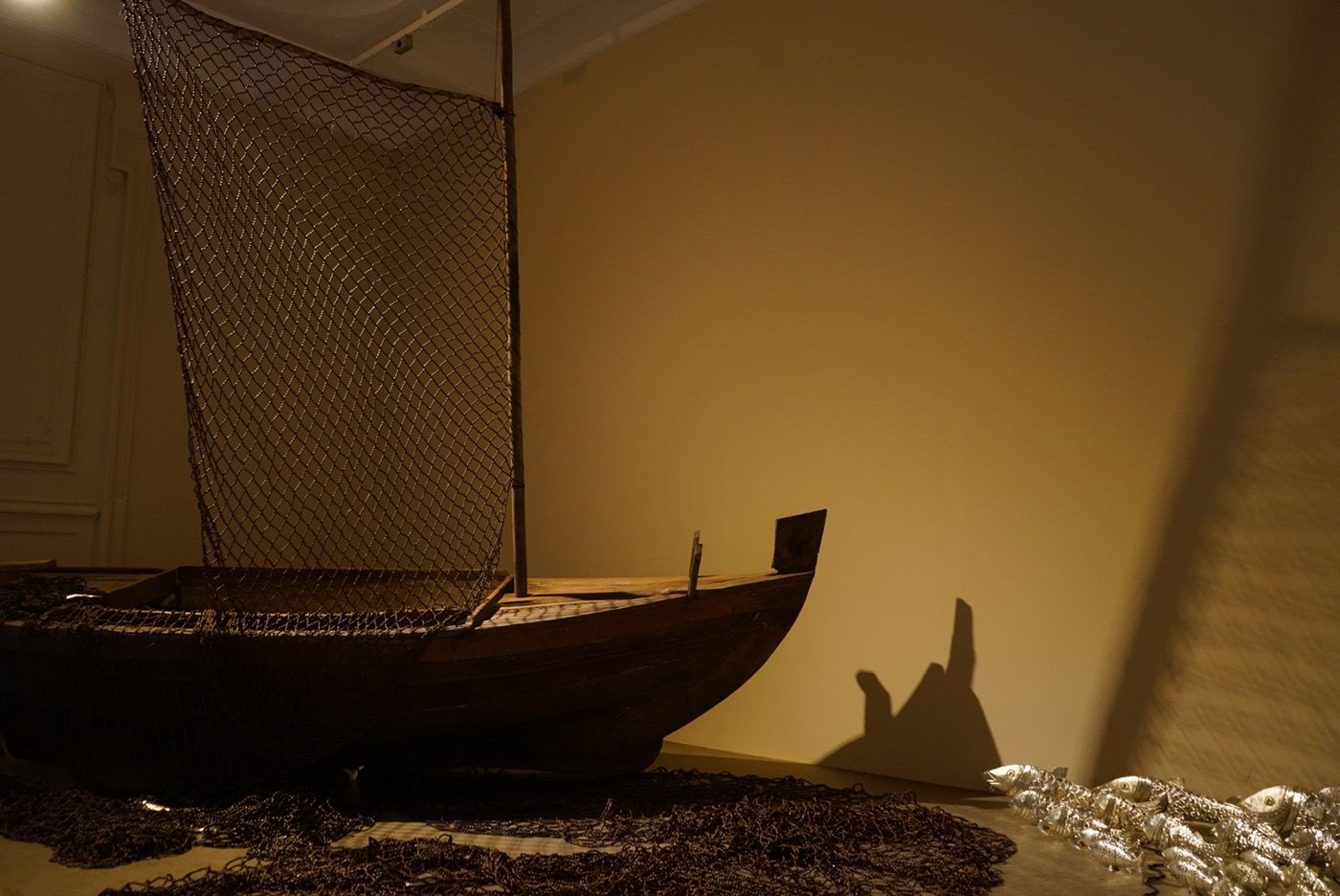
Nádia Taquary, “Puxada de Rede”, 2013. Installation composed of a boat with mast, net, and 60 silver-plated metal fish. Boat: 3 m; net: 17 m. Artist’s collection. Photo: Luan Teles / SecultBA
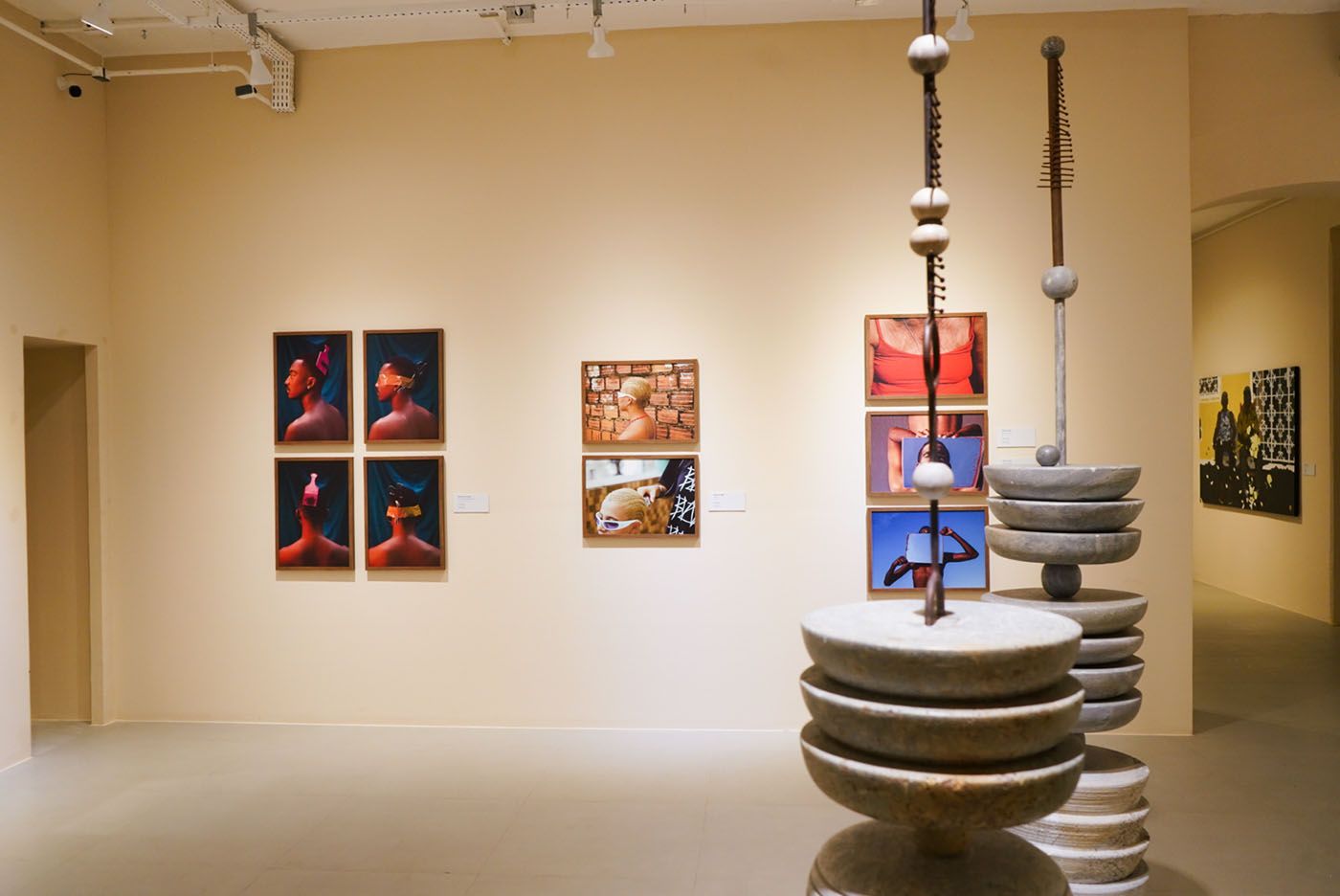
Exhibition view of Raízes: Começo, Meio e Começo, at MUNCAB. Photo: Luan Teles / SecultBA
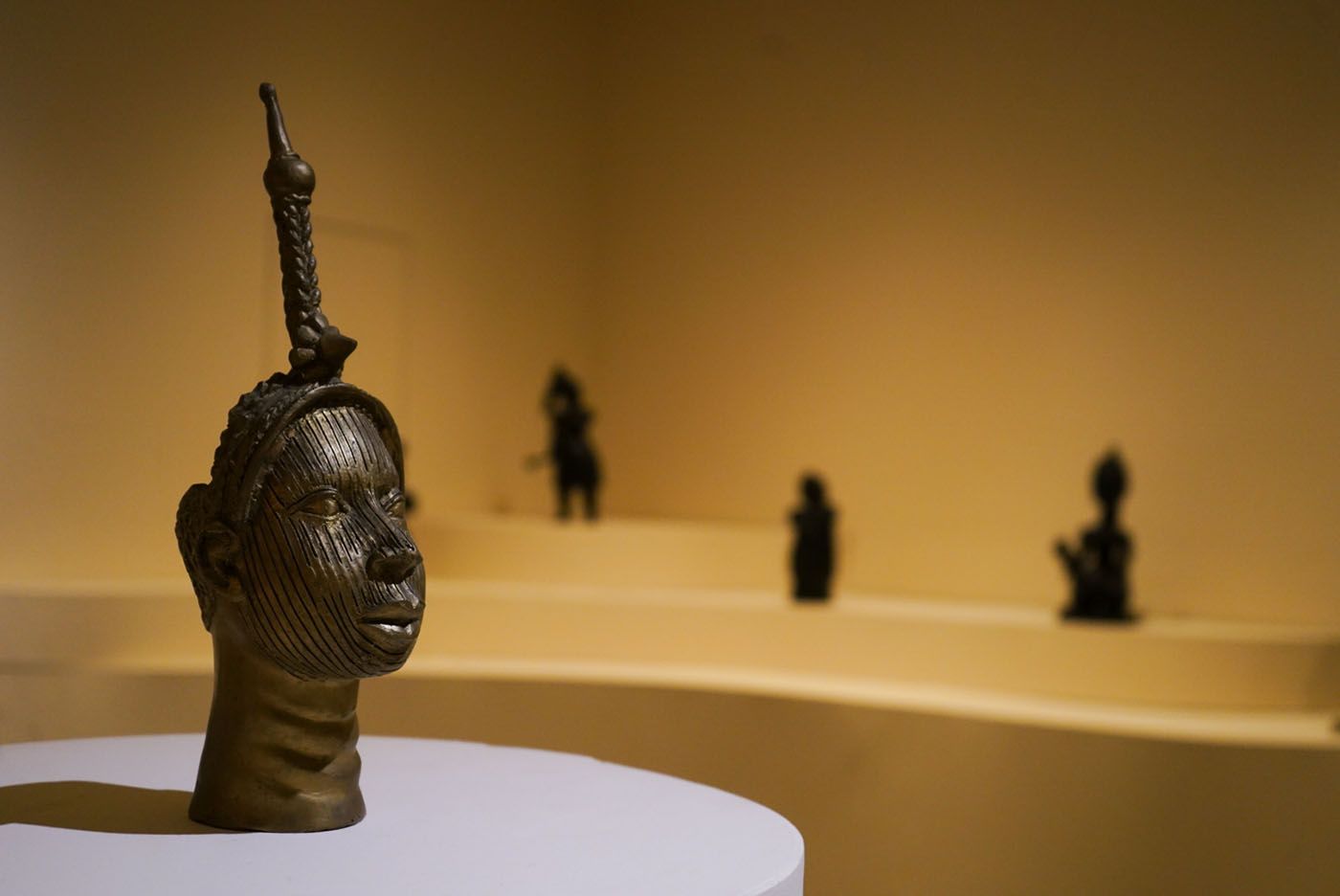
Unknown author, “Oduduwa – Yoruba Ethnicity”, undated. Bronze casting, 34 cm x 16 cm x 15 cm. Katuka Africanidades Collection. Photo: Luan Teles / SecultBA
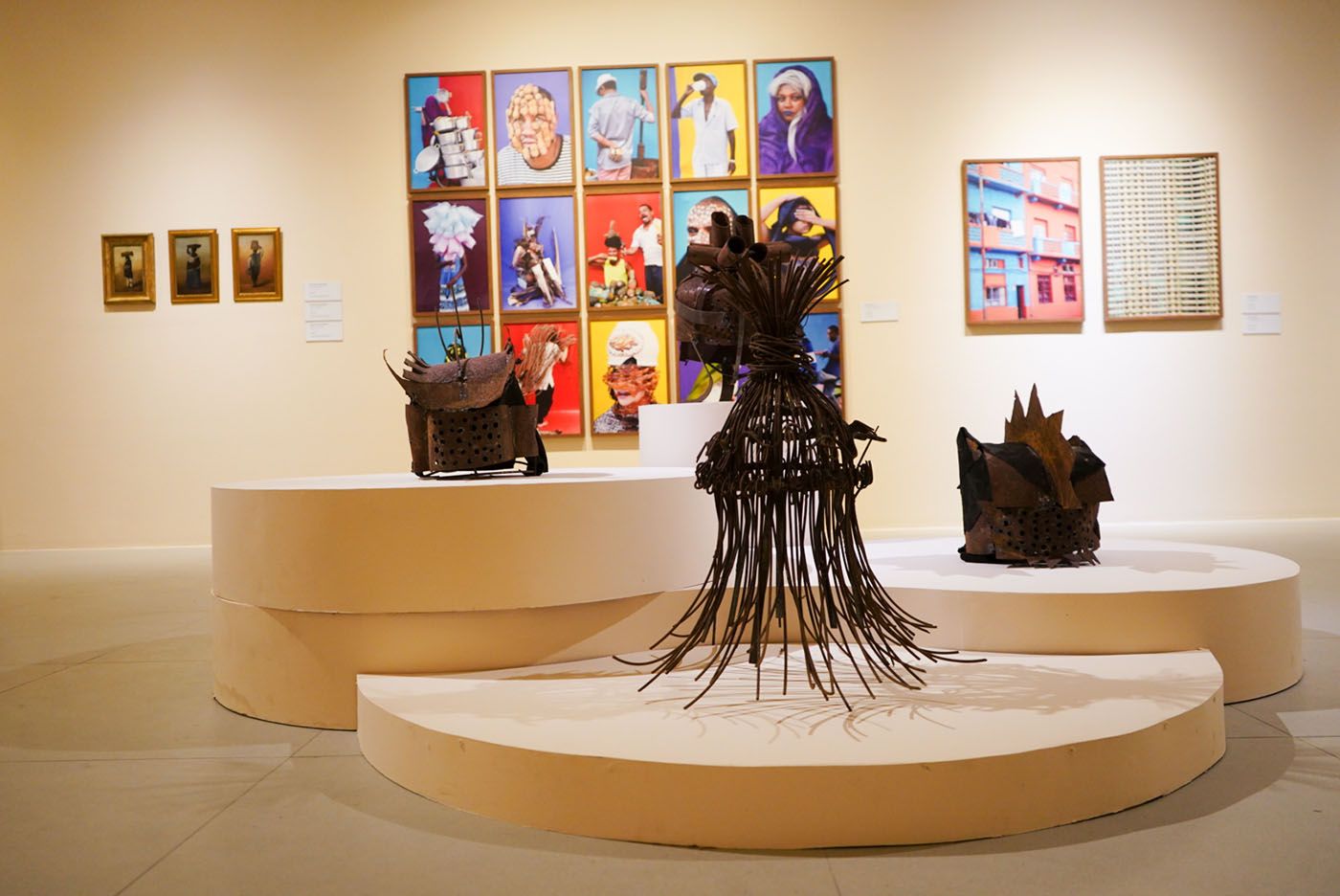
Exhibition view of Raízes: Começo, Meio e Começo, at MUNCAB. Photo: Luan Teles / SecultBA
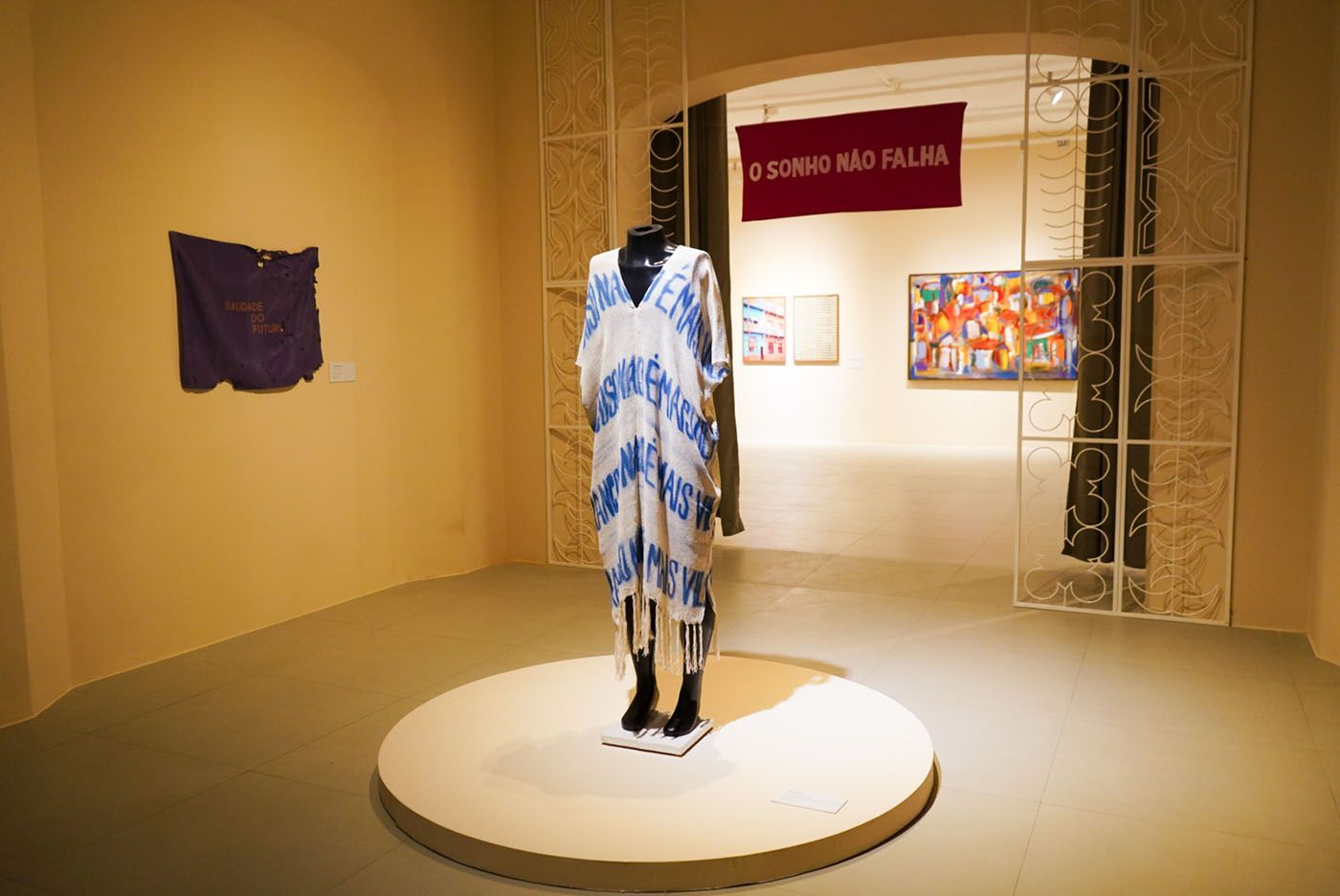
Nalbert P.S., “Trancoso Is No Longer a Village Series”, 2023. Three-dimensional object. Handwoven raw cotton threads, stencil printing, stitching and blue spray paint, 100 cm x 150 cm (total fabric: 100 cm x 300 cm). Artist’s collection. Photo: Luan Teles / SecultBA
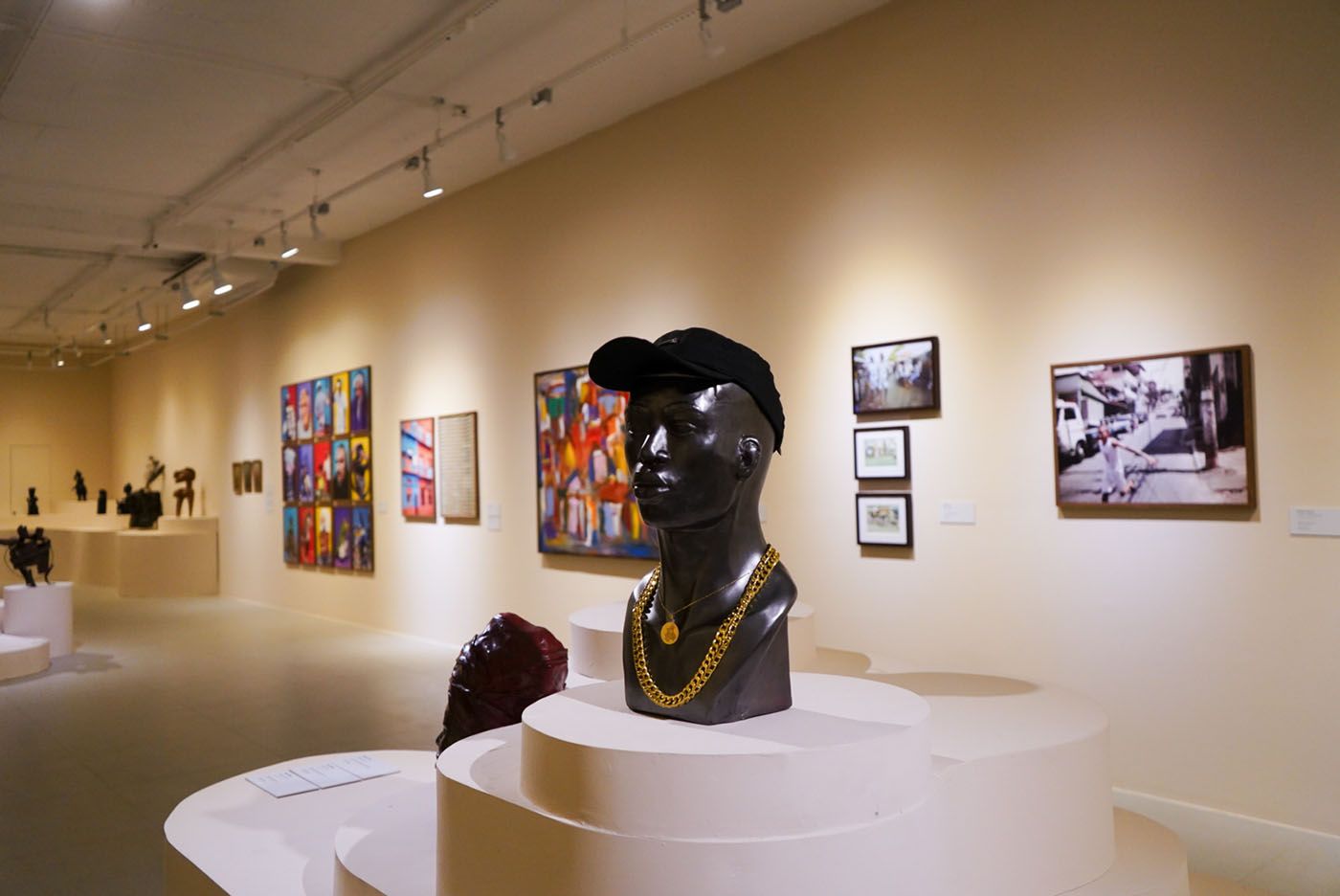
Annia Rizia, “Pivete Lucas”. Sculpture. Fiberglass and plated metals, 57 cm x 36 cm x 34 cm. Artist’s collection. Photo: Luan Teles / SecultBA
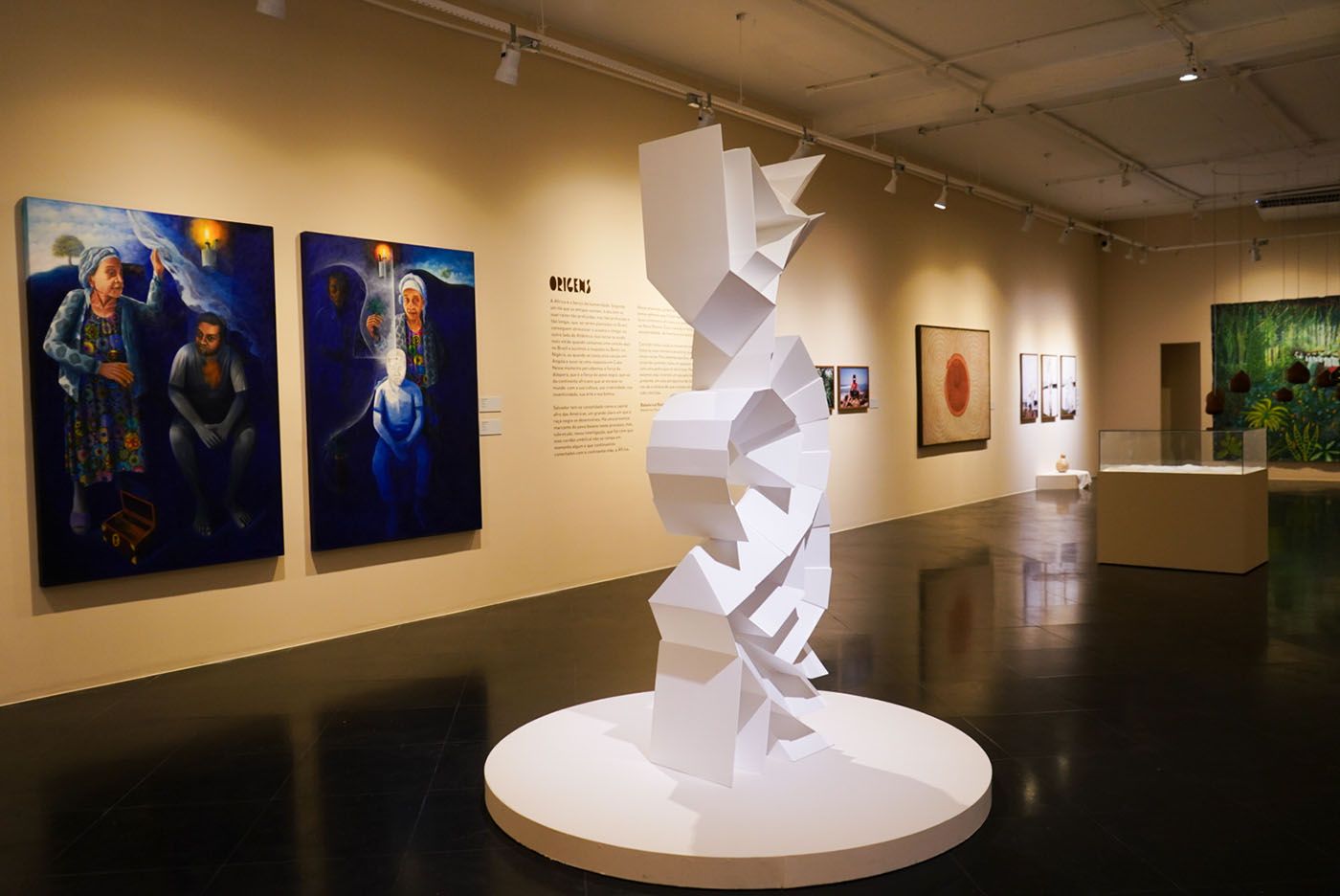
Emanuel Araújo, “Untitled”. Sculpture. Wood, 220 cm x 60 cm x 40 cm. Paulo Darzé Gallery Collection. Photo: Luan Teles / SecultBA
Vista de la exposición
61ª Bienal de Venecia: pabellones nacionales
61a Bienal de Venecia: el Arsenale y los Giardini
Oscar Murillo: Ósmosis colectiva
Vista de la exposición
Frestas – Trienal de Artes
Historias de la ecología