Nengi Omuku: As Water Never Touched
Nengi Omuku: As Water Never Touched
15 Enero 2024
Cierra: 27 enero 2024
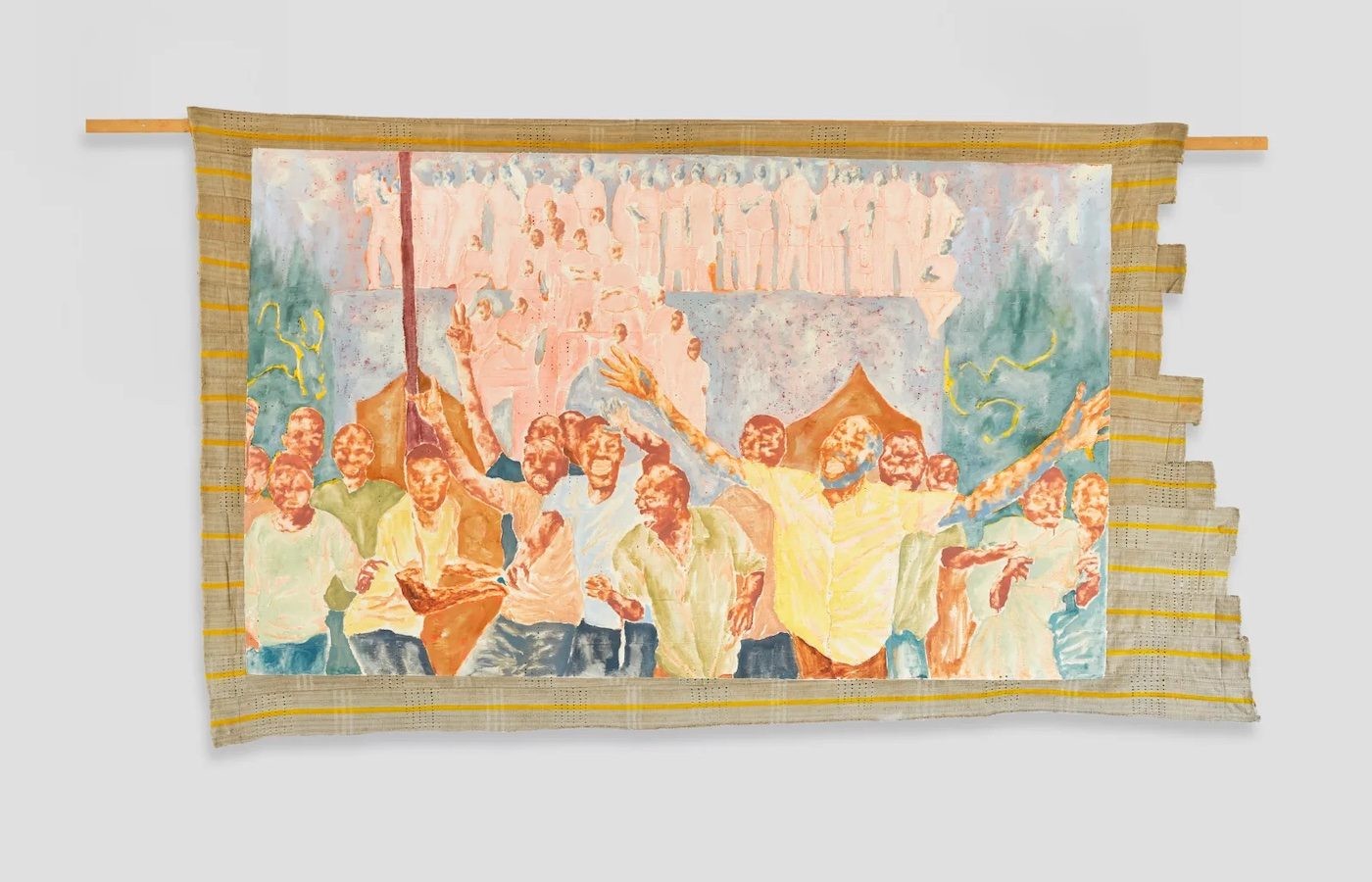
Crowds of faceless figures gather beneath stormy skies, bodies bathe in green water, singular, shifting subjects sit posed on a wooden stool. As Water Never Touched, a solo exhibition by Nengi Omuku at Kristin Hjellegjerde Gallery, West Palm Beach presents a powerful new body of work that delves into three key aspects of the artist’s practice: political paintings, landscapes and portraits. While dealing with different subject matter, these works are united by Omuku’s distinctive painting process and a blurring of temporal and spatial boundaries where figures and environments converge to create fragile, other-worldly scenes.
Omuku paints on a Nigerian fabric known as Sanyan, which was traditionally made from wild silk, obtained from the cocoons of moths and spun into a thick, rough fibre before being woven together to make fabric for traditional attire. Although production of this silk cloth has fallen into decline, the fabric is still woven in certain circles using industrial cotton as a substitute. Omuku sources her material from vintage markets in an attempt to reclaim the historical significance of the cloth as well as a lost sense of pride in craftsmanship. To make her canvases, typically on a vast scale, she stitches several strips of the fabric together, resulting in a textured surface dotted with tiny holes that allow the light to filter through, creating a sense of ephemerality while also imbuing each work with a strong sense of place.
In this exhibition, the fabric is suspended in space in a maze-like arrangement, allowing viewers to walk around and in-between the works. Each composition appears simultaneously whole and fragmentary as if fading into or out of focus. In Omuku’s words what the paintings capture is less a specific subject or event than a psychological state or a thought process, something that you’re trying to grasp or make sense of that keeps eluding you. This is perhaps most obvious in Grace, which depicts a body lying on the floor of a house, wrapped in a red cloth. Brown grass is growing up around them, while nearby two other figures clad in white appear kneeling with their heads bowed in a pose of reverence. As with all of Omuku’s work, it is a scene that can be understood from multiple perspectives: as a depiction of sickness, death and grief and as a moment of transition or even renewal. The blocks of vivid yellow outside the window evoking blazing sunlight, or perhaps a portal to another world, a fresh beginning.
Elsewhere, the ambiguity is connected more specifically to the continued political uncertainty not just in Nigeria but in the world more generally. Works such as Scattered Sunbeams and The Symphony capture moments of unease and precarity. The former depicts some form of protest or conflict. The burning tyre and confrontational body language of the figures in the foreground anticipates violent action, but it never materialises on the canvas – perhaps it is beyond what we can see or perhaps it is simply an empty threat, a rush of intensity that slowly dissipates as we regard the scene, filtering out through the holes of the fabric. The Symphony similarly occupies a state of in-between. This work references the recent elections in Nigeria, when for moment, Omuku says, we all thought something beautiful was going to happen – that change was possible. A sense of hope is depicted through the figures as they clutch pieces of paper and lean forward to watch their votes being cast but the environment around them is more unstable. The background is a watery, tumultuous swirl of blue, red and white that extends all around them, threatening to wash away the image and with it, their collective dream.
A series of smaller scale portraits, meanwhile, focuses on conflict experienced at an individual level. Here, the figures are singular but split, reflecting Omuku’s perception of the body ‘as a site or an event centre’ that is constantly changing in response to both the internal and external worlds. I’ve always thought about different ways to talk about the body as multilayered as opposed to the singularity of what you see. I think about how you paint a mental space in response to what is happening within and around the body,’ she says.
Together the works paint a powerful portrait of a world in flux. Omuku thinks of these works, like the title of the exhibition, as half finished sentences, capturing the edge of a feeling, situation or place, but in offering just a fragmented glimpse, they open up a world of possibility.
Más artículos de

Beyond Representation
7 dic 2023–31 dic 2026
M’barek Bouhchichi: Les mains des poètes
24 abr–17 oct 2026

Cecilia Vicuña - El glaciar ido
30 abr–20 sept 2026
Panmela Castro – A Crônica da Não-Solidão
14 mar–6 sept 2026
The Narratives of Migration
27 mar–26 ago 2026
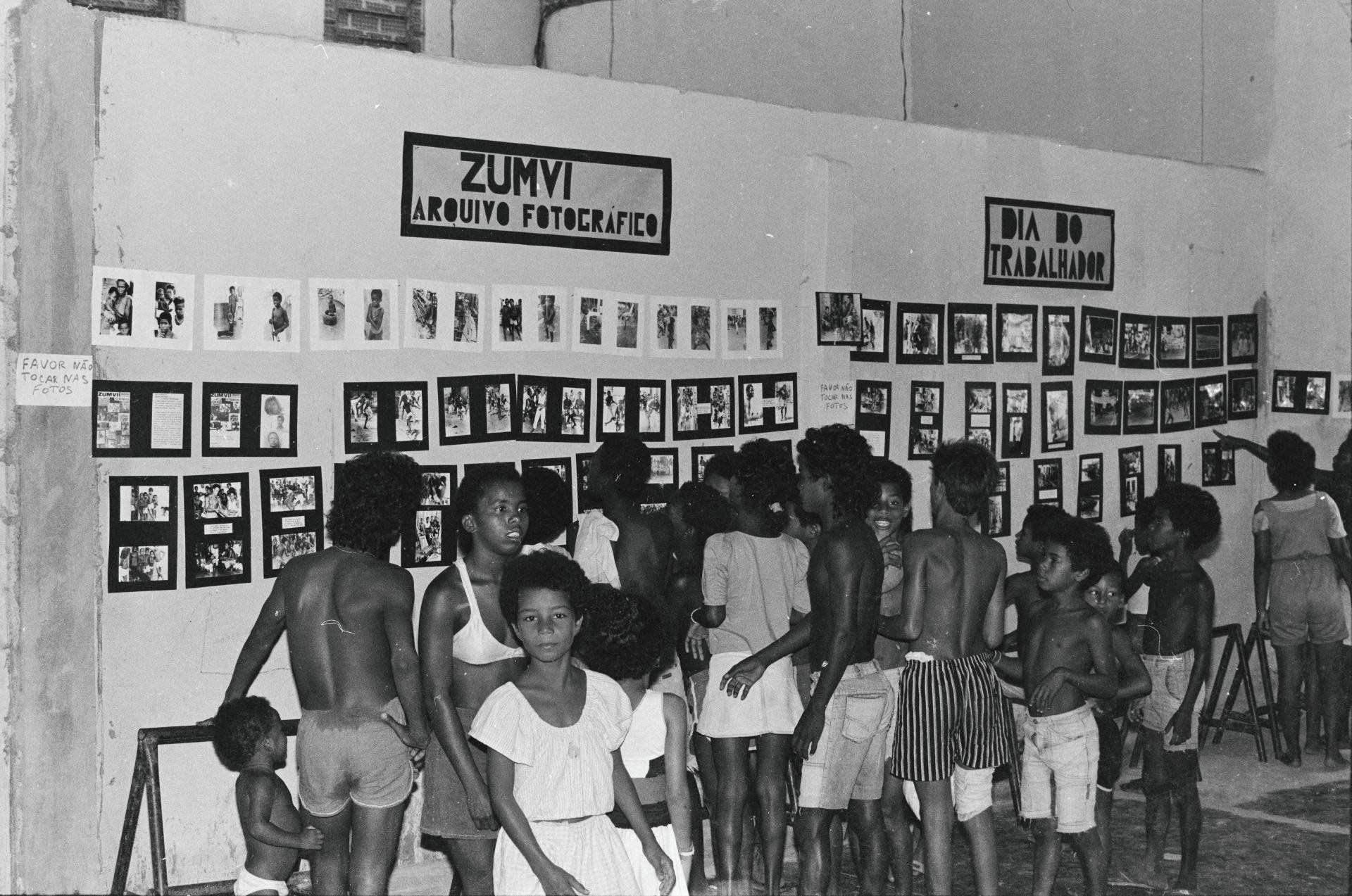
Zumví Arquivo Afro Fotográfico
28 mar–23 ago 2026