Colonial Amnesia, Yesterday and Today
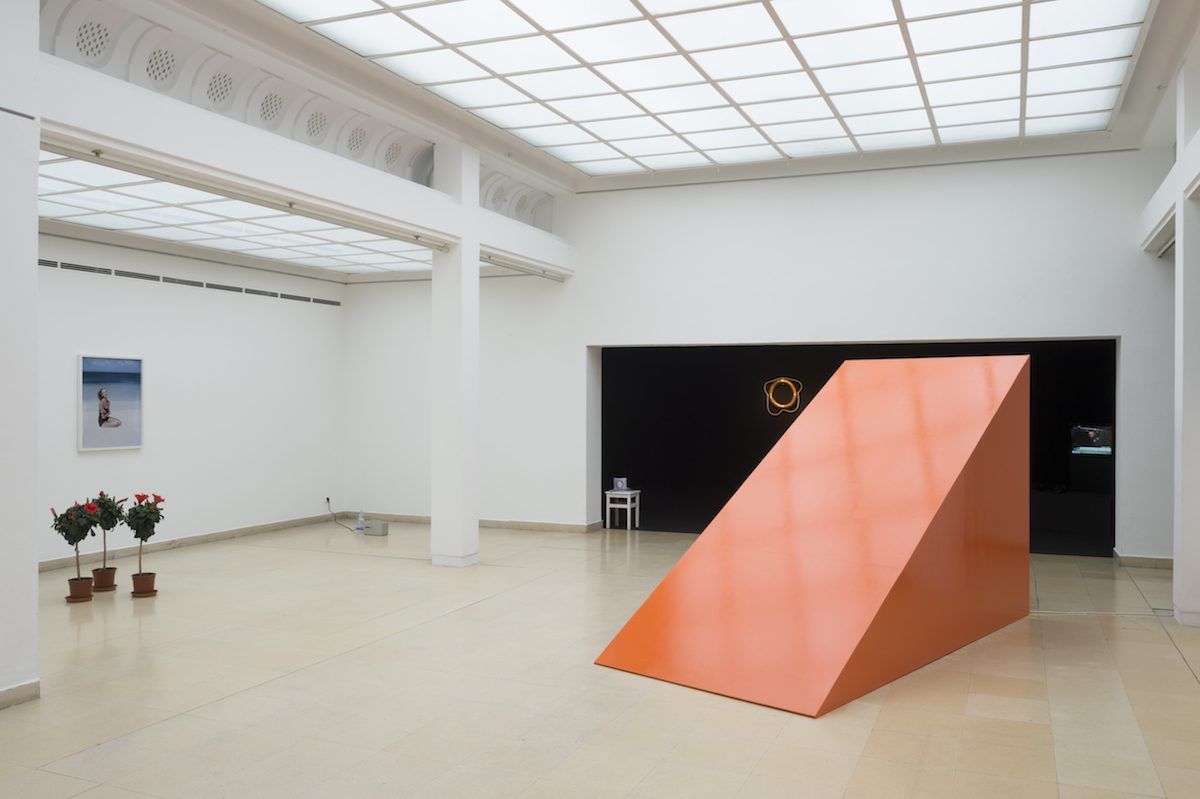
Until 1st August, the artist Emma Wolukau-Wanambwa exhibited works at the Innsbruck Art Pavilion dealing with British colonialism in East Africa and the problem of collective forgetting. Sønke Gau reflects on her work within a group show about resist
The exhibitionWiderstand und Amnesie #2 (Resistance and Amnesia #2), curated by Andrei Siclodi, assembles new artwork by fellows at the Innsbruck Art Pavilion. Coming from a range of viewpoints, the exhibition revolves around the question of how intrinsically the European project requires (post-)colonial amnesia in European collective memory. The gaps in the hegemonic construction of history serve as starting points to be made visible through artistic means. The idea is to bring repressed or lost knowledge up to date in order to generate emancipatory potential within the power gradient between the Global North and South.
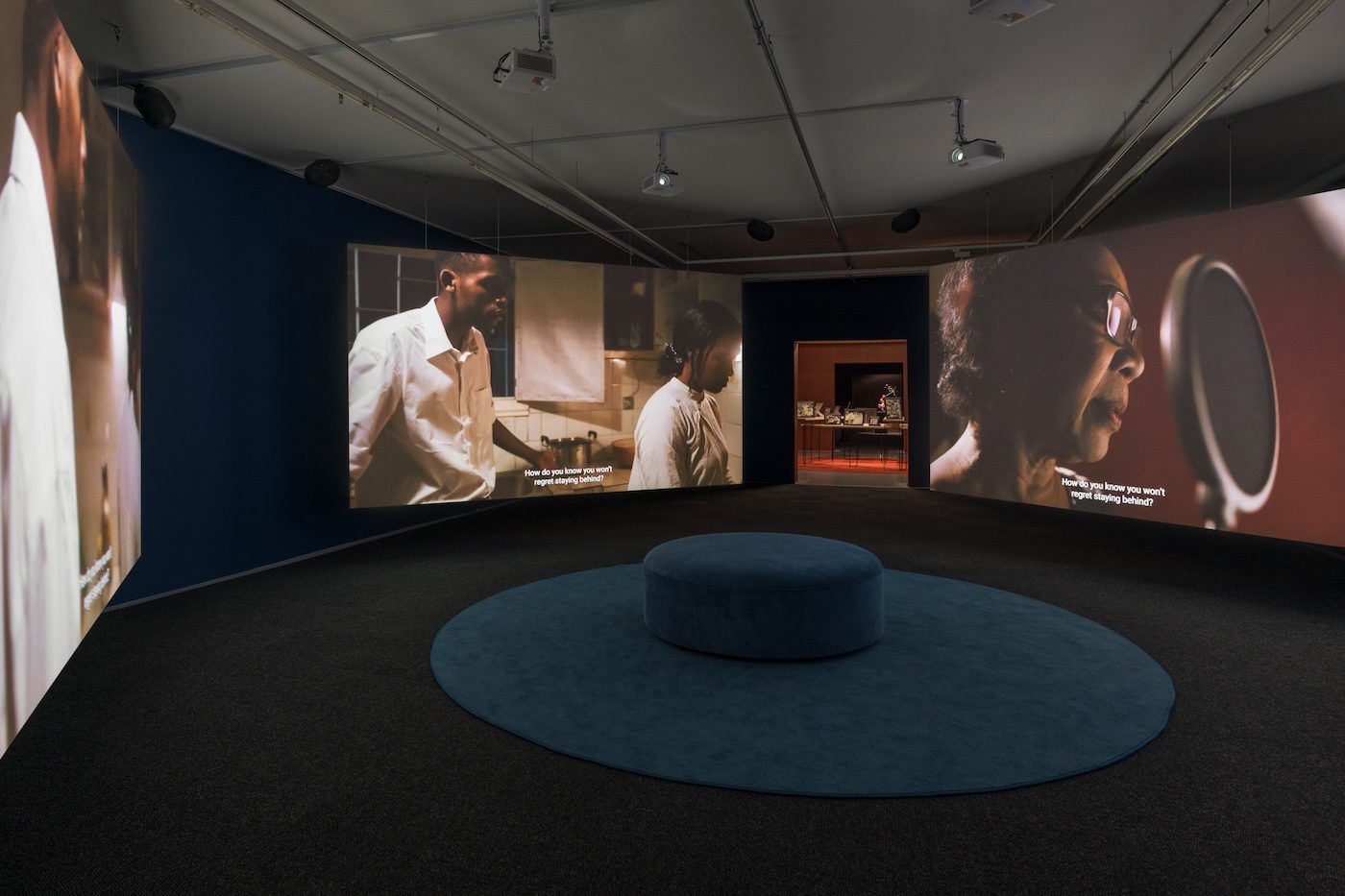
The dominant narrative propagated by the media – of people fleeing war, poverty, and hunger in their countries of origin to settle in safer, more prosperous Europe – is juxtaposed against a more complex story. The “promised lands” to which the artist Emma Wolukau-Wanambwa is referring in her video installation of the same name are not the rich nations of Europe, but two countries in eastern Africa: modern-day Kenya and Uganda.
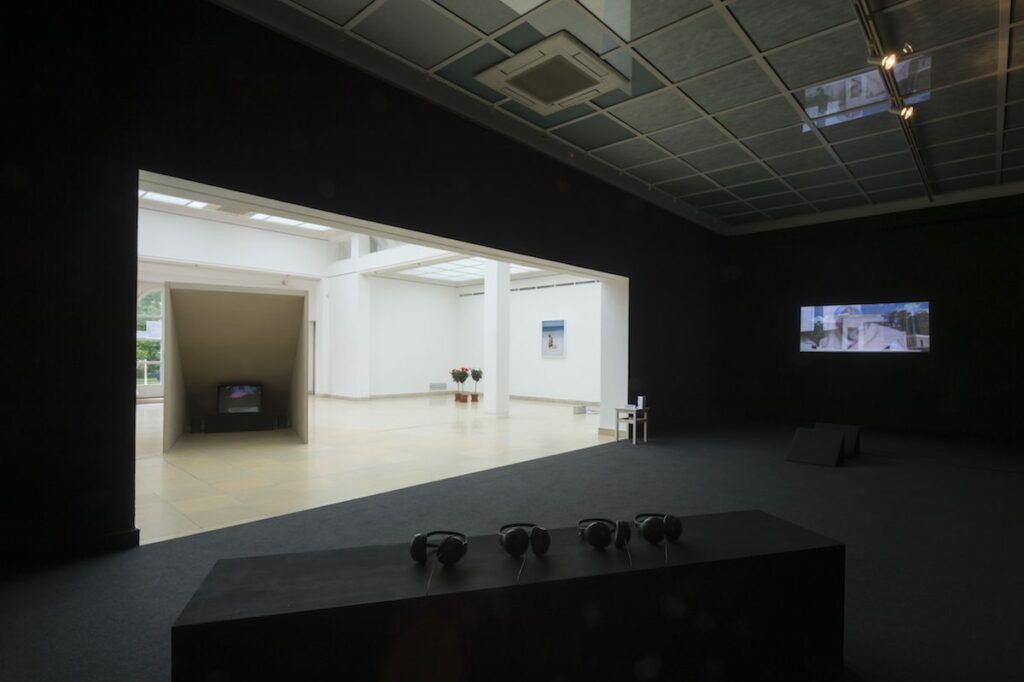
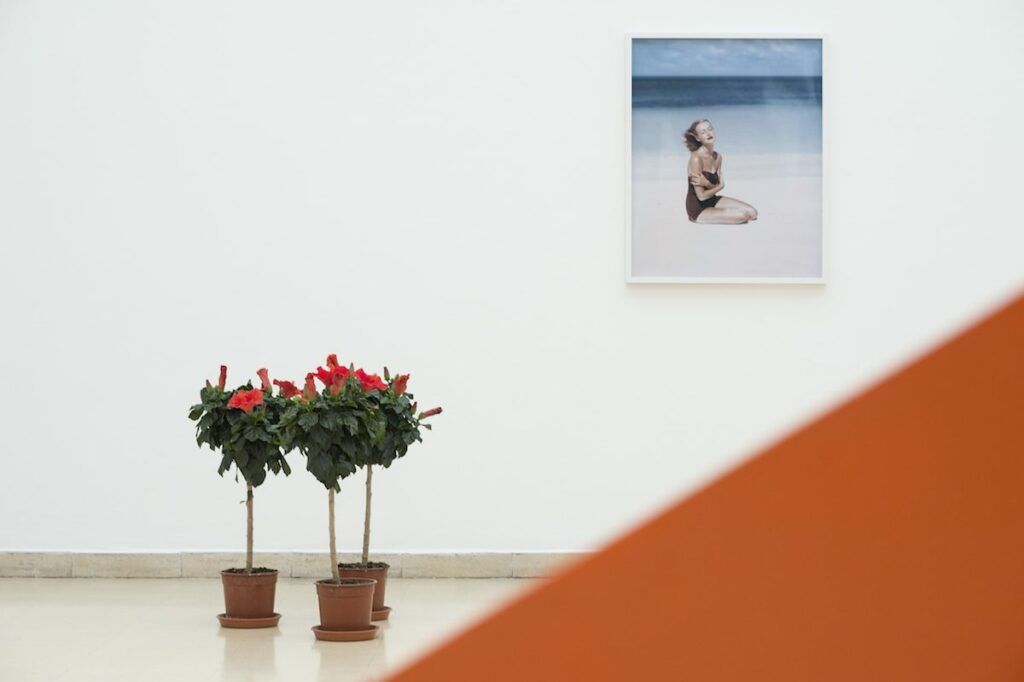
</a> Widerstand und Amnesie #2, Kunstpavillon, 2015 (QUER). Raumansicht: Arbeiten von Emma Wolukau-Wanambwa, Raja'a Khalid, Annalisa Cannito (v.l.n.r.)</figure>
Wolukau-Wanambwa, whose artistic approach grapples with the tangled relationships between land, architecture, and the body in late colonialism, has been researching the legacy of British colonialism in East Africa since 2011. She is particularly interested in “mnemonic technologies” introduced during the colonial era, such as museums and state archives, which play a major part, as sites of remembrance, in the construction of “imagined communities.”
On a research trip to the northern shore of Lake Victoria, she learned of a cemetery used as a resting place for people largely from Poland and the Ukraine. Upon further investigation, she found out that these were refugees who had been housed in local camps during and after World War Two. In 1941, when the United Kingdom and the USSR were allied in the war against Germany, they were deported from the Siberian Gulag via Tehran and British India to what was then the British “protectorate” of Uganda, where they lived in isolation from the locals.
</a>
The landscape portrayed, apparently untouched, is actually cultivated and not “natural” at all. Contrary to what Hertzka’s book title and the visions of similar utopias imply, in fact the land to be settled was not “open country” – or terra nullius, as colonialism once claimed. It was inhabited territory, and as such European land seizures always involved oppression, displacement, and subalternization.
Such utopias are intimately connected to phantasmagorical projections made by colonialism. With that in mind, it proves to be precisely intentional that the viewer, standing outside the booth, inevitably casts a shadow on the video screen. The video’s soundtrack also includes the artist’s impressions of a night train from Brenner to Innsbruck, at whose terminus a police special-ops unit took predominantly African refugees “into custody.” Thus Wolukau-Wanambwa’s video essay is a haunting reflection on European colonial amnesia, placing the current waves of migration in the same historical context as colonialism. She reminds us that this chapter of a repressed history is by no means behind us, but continues to have reciprocal ramifications to this day.
Text by Sønke Gau.
Histoire coloniale
AMANI kukita | kung’oa - Regards allemands et tanzaniens sur une collection coloniale
Examiner les traces dé/coloniales à travers les collections coloniales
Dekoloniale and C& Announce Berlin Residents 2024
Postcolonial
Osei Bonsu : une perspective curatoriale sur la photographie comme identité et tradition, contre-récits et futurs imaginaires
Histoire et fiction : le travail de mémoire cinématographique de Tuan Andrew Nguyen